Explore numbers from 1 to 100, practise skip counting, and match numerals to number names. Download a 0–20 picture chart or a 1–100 chart in color or black and white.
Explore the hundred chart
Select a number or type one below. Green highlights show the chosen counting pattern; orange marks your selected number. Arrow keys move between neighboring numbers.
Notice which way the numbers run
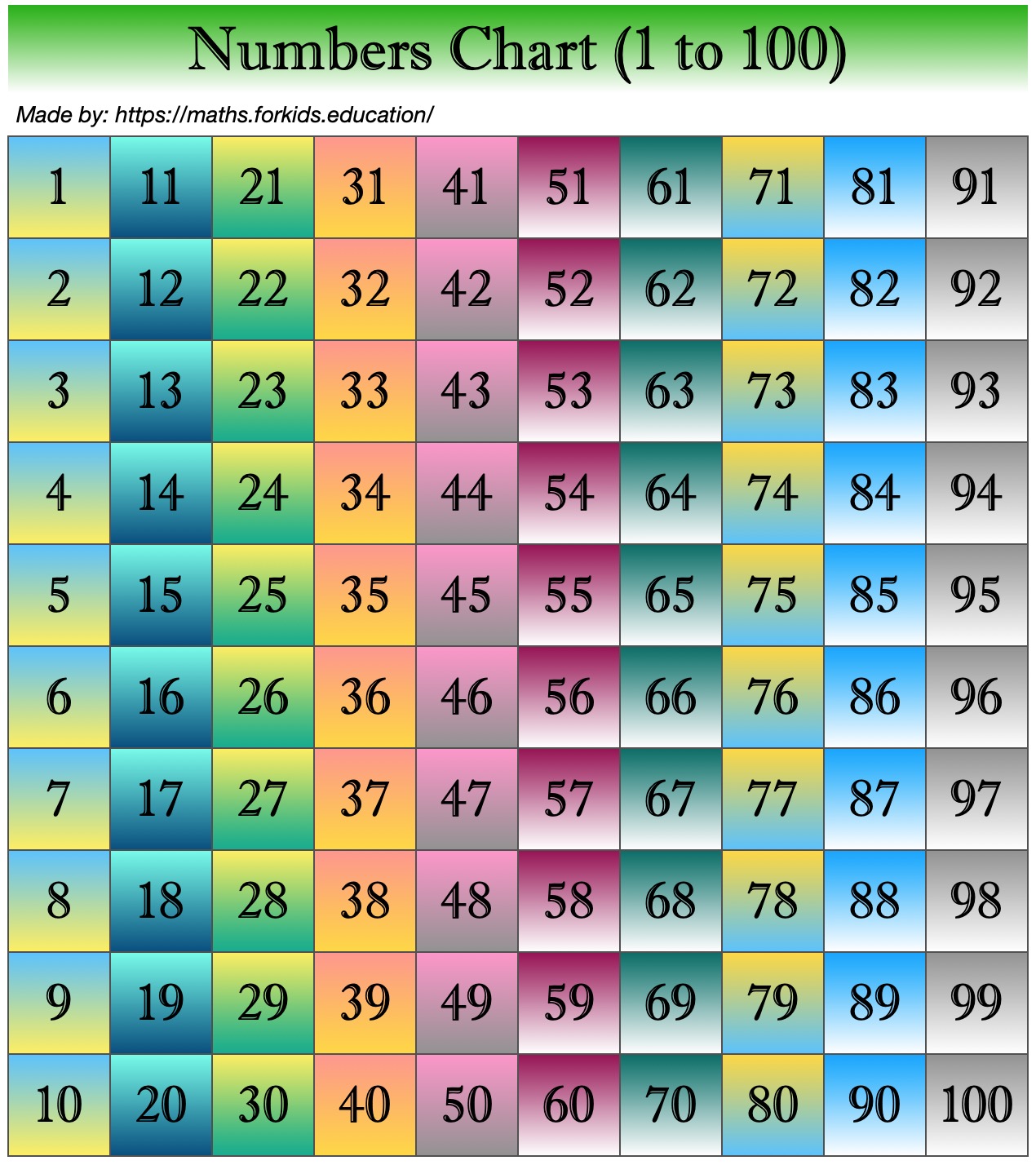
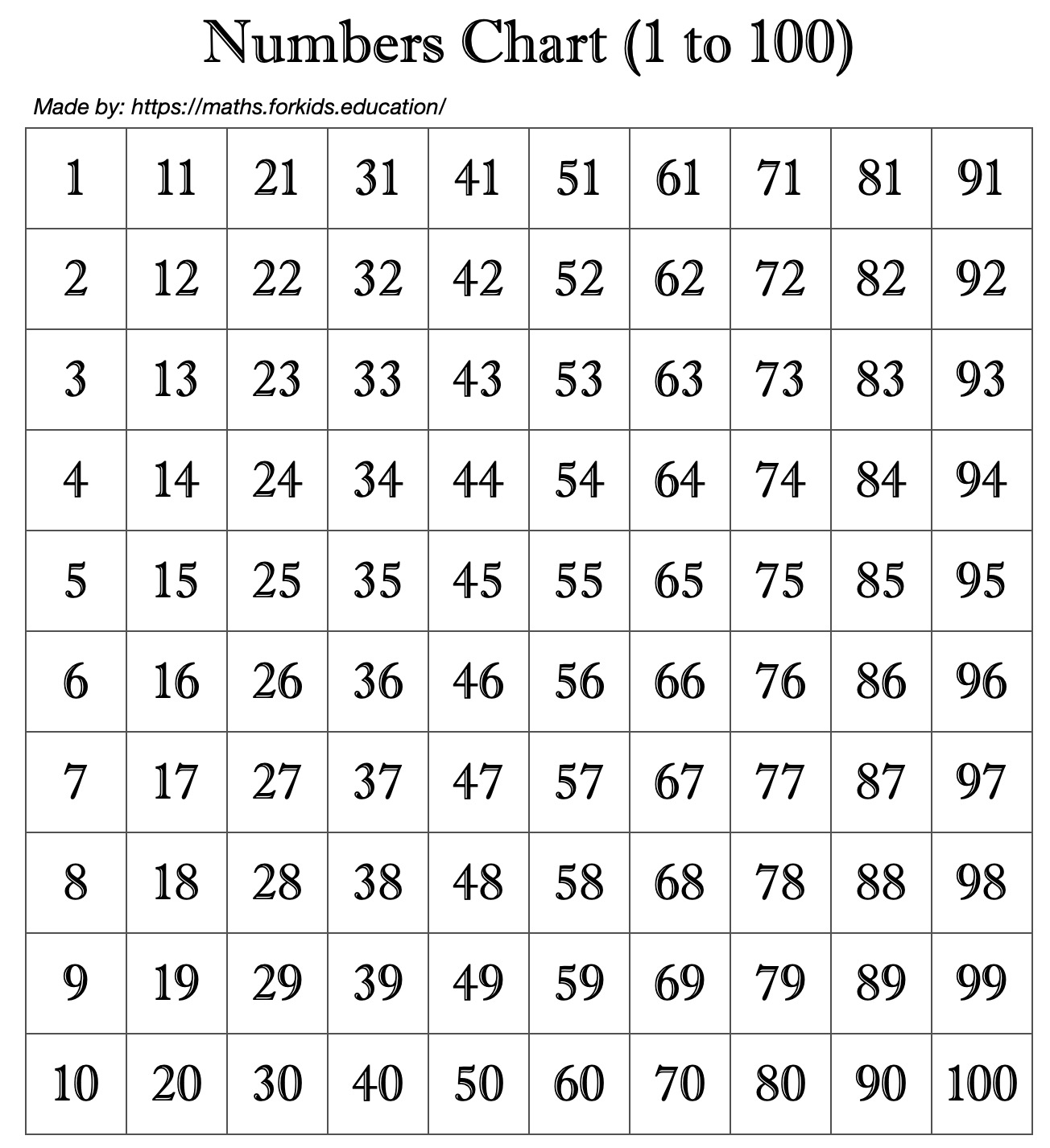
The two printable 1–100 charts below count down each column: 1, 2, 3, …, 10, then start the next column at 11. Moving down one cell adds 1; moving right one cell adds 10.
Many classroom hundred charts count across each row instead. In that arrangement, moving right adds 1 and moving down adds 10. Both arrangements contain the same numbers. Switch the explorer's arrangement to compare them.
Picture chart: 0 to 20
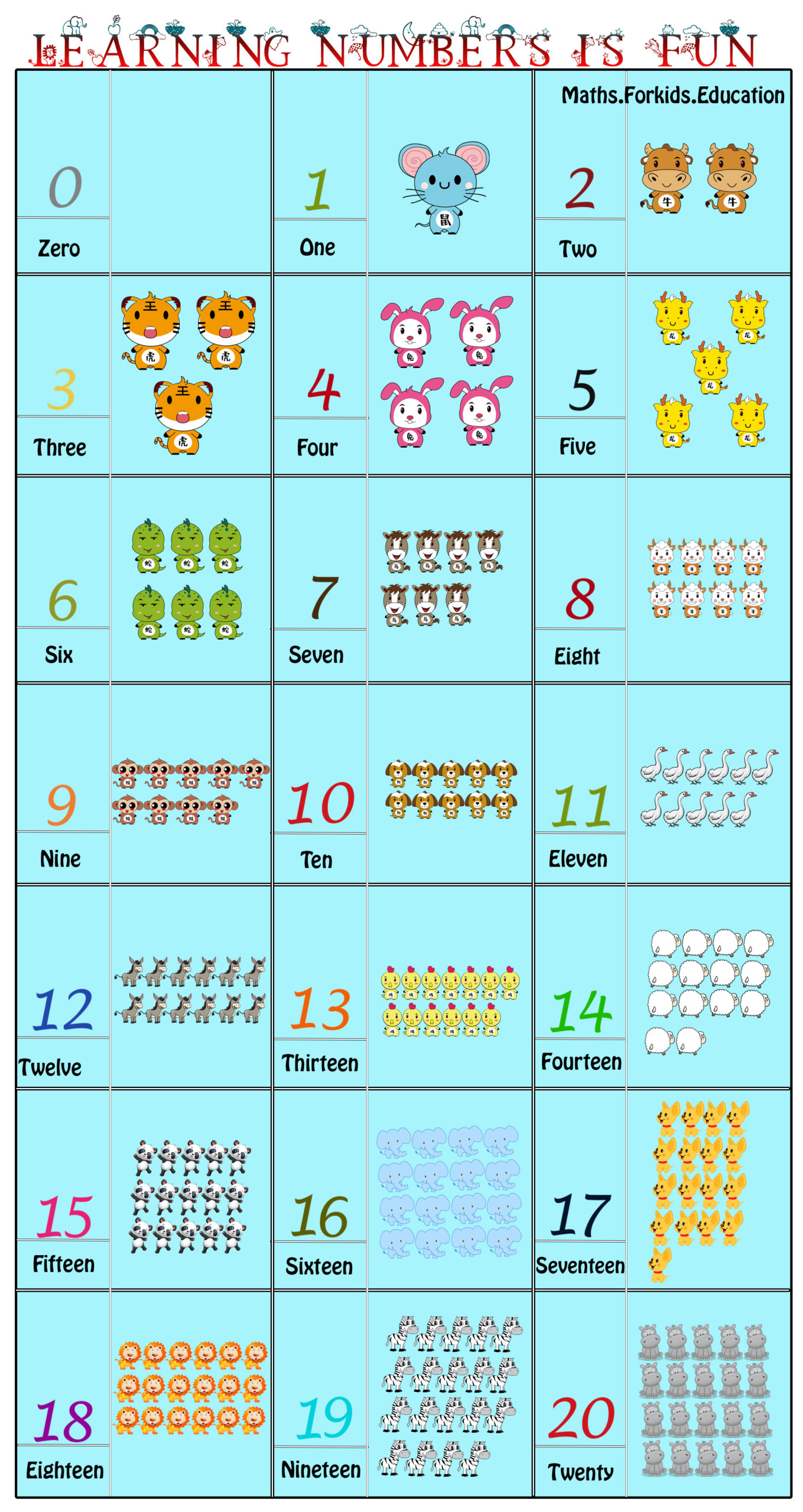
Count the objects in each box and match the total to its numeral and number word. The zero box has no objects, showing that zero represents none.

Colorful 1–100 chart
Follow a column to count in ones, or follow a row to count in tens. Point to a number and ask what comes before and after it in the counting sequence.

Black-and-white 1–100 chart
Use this version for writing, circling patterns, or coloring multiples of 2, 5, or 10.

Try a few patterns
- Twos: 2, 4, 6, 8, …, 100. These are the positive even numbers on the chart.
- Fives: 5, 10, 15, 20, …, 100. Their ones digits alternate between 5 and 0.
- Tens: 10, 20, 30, …, 100. Each is ten more than the previous number.
Practice
In the downloadable column-counting chart, what is directly below 37? What is directly to its right? What number comes immediately before 60 in the counting sequence?
Check the answers
38; 47; 59.
Explore even and odd numbers, or find multiplication charts for more skip-counting patterns.